
Seven Reasons to Attend What’s Next in Philanthropy (Nov. 12)
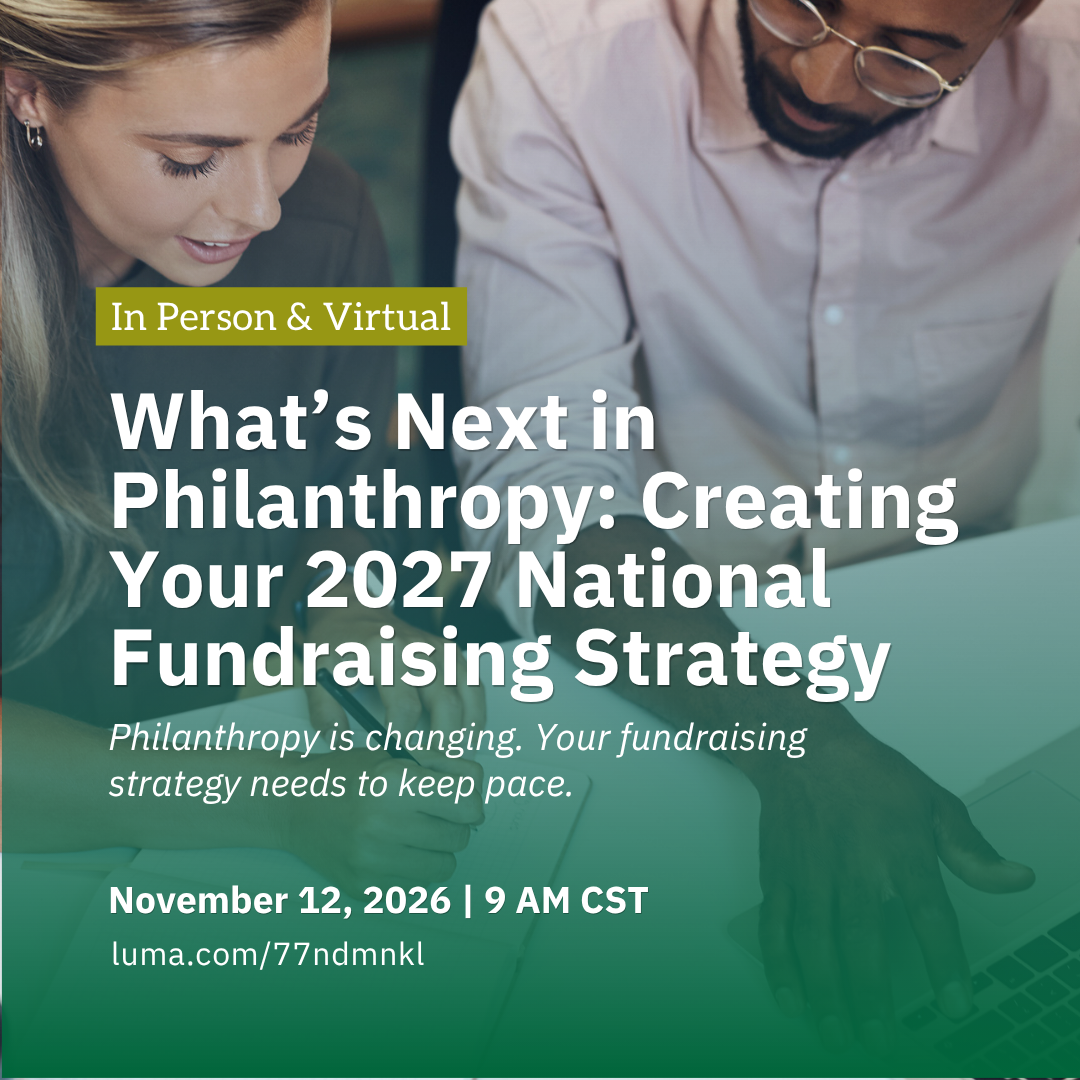
Philanthropy is changing faster than most fundraising plans can keep up with, and the funders you knew in 2024 are not the funders you will be approaching in 2027.
New leaders are setting new priorities, giving models are maturing, and dollars are moving into places they have never been before. On November 12, Access Philanthropy is hosting What's Next in Philanthropy: Creating Your 2027 National Fundraising Strategy, a forward-looking workshop built to help you prepare.
Here are seven reasons it belongs on your calendar.
1. Leadership is Changing at the Top
New presidents have arrived at the Ford Foundation, the Knight Foundation, and the Joyce Foundation, and new leadership almost always means new priorities. We will dig into what the Ford Foundation's new president means for a possible program shift around democracy, and what the other transitions could mean for the organizations these funders support. Knowing a funder has new leadership is one of the clearest openings you can act on, and we will show you where those openings are.
2. Funders Are Giving More, and You Should Know Who
A number of funders have upgraded their giving, including the Annie E. Casey Foundation, the Kresge Foundation, the Kellogg Foundation, the US Energy Foundation, the Shubert Foundation, the Charles Sweatt Foundation, the Julie and Doug Baker Foundation, and the Linsmayer Foundation, among others.
When a funder expands its giving, it is often looking for new grantees to support. We will walk through who is giving more and what they are now looking for.
3. Priorities Are Shifting in Ways That Create Openings
Funders are not just giving more, they are giving differently. The Robert Wood Johnson Foundation has made new commitments to community power, racial and Indigenous health equity, affordable housing, economic inclusion, and Medicaid protection. WK Kellogg has sharpened its focus on early childhood and maternal and child health. The Morgan Family Foundation has shifted toward general operating, multiyear, and immediate danger-related grants.
Each of these shifts is a door that was not open a year ago, and we will help you see which ones fit your work.
4. Corporate and Community Funding Is Expanding in Minnesota
Some of the most interesting movement is happening close to home. We will cover Huntington Bank's new Minnesota president and their $80 billion community plan, the Federal Home Loan Bank of Des Moines' Member Impact Fund in Minnesota, Kwik Trip's increased accessibility to new store-based programs, and the Mellon Foundation's major shift toward Minnesota performing arts. If you fundraise in Minnesota, these are developments you will want to understand before your competitors do.
5. Giving Models Themselves Are Evolving
It is not only who gives and what they fund, but how. We will look at the Dick's Sporting Goods Foundation's maturing giving model, State Farm's two distinct funding programs and how they differ, Boston Scientific Foundation's new geographic reach, and the US Energy Foundation's shift from passing policy to implementing it. Understanding how a funder operates is often the difference between a proposal that fits and one that gets passed over.
6. You Will Learn Who's Funding AI
Artificial intelligence is reshaping both the work nonprofits do and the funding available to support it. We will cover who is funding AI-related work, a fast-moving area where early movers have a real advantage, so you can position your organization for one of philanthropy's emerging priorities.
7. You Will Get Current Intelligence You Cannot Find on a Website
Much of what we will cover simply is not published anywhere. Big program and financial changes at the Catholic Campaign for Human Development, the Carnegie Corporation of New York's new name, the Sanger family adding a second generation to its funding board, these are the kinds of details that reshape where and how funding flows, and the kind our team tracks so you do not have to. This is the current, specific funder intelligence that turns a scattershot fundraising effort into a strategy.
If your fundraising plan is still built on last year's map, this workshop hands you a new one.
Join us on November 12 for What's Next in Philanthropy: Creating Your 2027 National Fundraising Strategy, in person or online, and leave with the funder intelligence, tools, and strategy to fundraise for what's next.
